I recently sat in a meeting with a Place Manager to discuss how technology might support their town. As we worked through the various challenges of the modern high street, the Place Manager leaned across the table and declared that we must prioritise the Independents at all costs.
“They are the soul of the town.”
Ah yes. The soul. After the meeting I wandered through the town in search of it. Surely it was visible in amongst the vape shops, nail bars, and “cash-only” takeaways? Or in the phone repair shops with the fake Labubu’s in the front window? Or in the newsagent with the “Back in 20 minutes” sign permanently blue-tacked to the door?
Judging by the number of “To Let” signs, it appeared that the soul had skipped town a while back. It certainly wasn’t paying any rent. Prioritising the Independents began to feel like an expensive form of nostalgia.
For years now, high street regeneration has been pitched as a moral crusade. A pantomime, whereby the Independent is the plucky orphan hero, and the National Chain is the moustache-twirling villain painting our beautiful rainbows beige. And since “Shop Local” is generally understood to mean shop local and independent, choosing where to buy your sandwich becomes a virtue-signalling act of political resistance. Buy local, and start polishing that halo. Buy from a chain, and you may as well personally bulldoze the community centre.
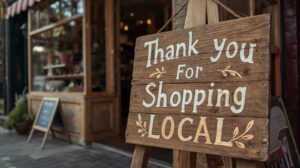
But here’s the awkward bit. What if “local” isn’t a virtue? What if it’s just…proximity? And what if “independent” is just a polite way of saying not popular enough for a second location?
There are thousands of excellent independent businesses on our high streets. The best ones create identity, loyalty, and reasons to return. They earn their place as the soul of the town.
But there are also thousands with inconsistent opening hours, minimal online presence, and little awareness of how modern consumers actually behave. Should we really prioritise all Independents? Such a strategy may not revitalise our high streets so much as pickle them in a state of artificial decay.
Of course, not every business starts from the same place. For many, opening a barber shop, nail bar, or takeaway is the most accessible route into self-employment. In a challenging economic environment, they create livelihoods, often for those with limited capital, limited networks, or who are new to the country.
Technology is reshaping that equation. A tech-savvy start-up can reach a wider audience in weeks than a legacy brand might have built over decades. Social media, search, and digital town hubs have levelled the playing field, rewarding those who reach their customers in their natural habitat.
And this reality will only be exacerbated in the years to come. If a business is struggling with the digital baseline of 2026, they will be invisible to tomorrow’s shoppers. We are moving past the era where a website was “enough”; and entering the age of Agentic Commerce, where the primary consumer isn’t a human browsing a shelf, but an AI agent authorised to make purchasing decisions based on real-time data. If a shop hasn’t structured its inventory and availability to be “readable” by these autonomous systems, it won’t even make the shortlist for a search.
So those retailers who ignore the zero click economy will be writing their own obituaries. It is pointless to fight to preserve them, any more than we should have fought to keep coal-powered trains or video rental stores. Not everything survives change, and not everything should.
Shoppers want certainty, whether online or in person. They come into a town centre because they know the Boots has their prescription and the Costa has functional Wi-Fi. They make the trip because of the boring reliability of the chain stores. And once they’ve achieved their core mission, they’ll wander, and stumble upon the boutique haberdashery or the quirky bookstore; the big brands providing the meat and two veg, the Indies adding the seasoning.
If the modern high street is to have any villain, it’s the Dull Middle. To survive in today’s economy, a business must be one of two things:
- Ultra-Convenient: (The Chains) Seamless tech, 7am to 10pm availability, and a no-questions-asked refund policy.
- Ultra-Experiential: (The Top-Tier Indies) Deep expertise, community workshops, and human relationships built over time.
The shops that fail are the ones caught in the No-Man’s Land in between. Wilko wasn’t as cheap as B&M nor as convenient as Sainsbury’s Local. Mothercare wasn’t a bargain and it wasn’t a boutique. Maplin traded its technical expertise for gadgets and found that Amazon could do generic better and cheaper. Even Debenhams, the ultimate generalist, proved that if you try to be everything to everyone, you eventually become nothing to anyone.
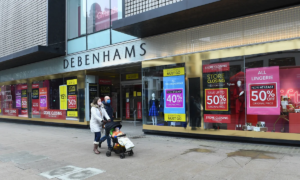 Arguably, entire industries face this future, as travel agents, estate agents and recruiters may find themselves as middle-men in a world that is automating the middle.
The survivors adapted. Not by clinging to what they were, but by rethinking their purpose. John Lewis realised that selling expensive cribs may drive revenue, but offering a two-hour nursery consultation drives loyalty. Lululemon understood that £100 leggings sell better if you also provide the place in which to wear them.
Instead of demonising the chains, we should be asking how to make our independents behave more like chains, and our chains behave more like locals?
For Independents, this means adopting a bit of corporate discipline. Use the data. Master your loyalty tools. Make sure your “Open” sign isn’t a work of fiction. For chains, it means genuine localisation. Let the branch manager stock local gin, showcase local makers, display local art. Give the store a reason to belong here, not just anywhere.
A vibrant town centre should be neither a museum for struggling hobbyists nor a corporate copy and paste. It should be a shark tank, a competitive arena where only the strongest survive, regardless of their tax structure. And the soul? Let it be the byproduct of excellence, not a substitute for it.